Opinion · Mining
The Superstack question nobody wants to answer
Decommissioning is a company decision with a public afterlife, and no level of government has said who is responsible for the ground beneath it.
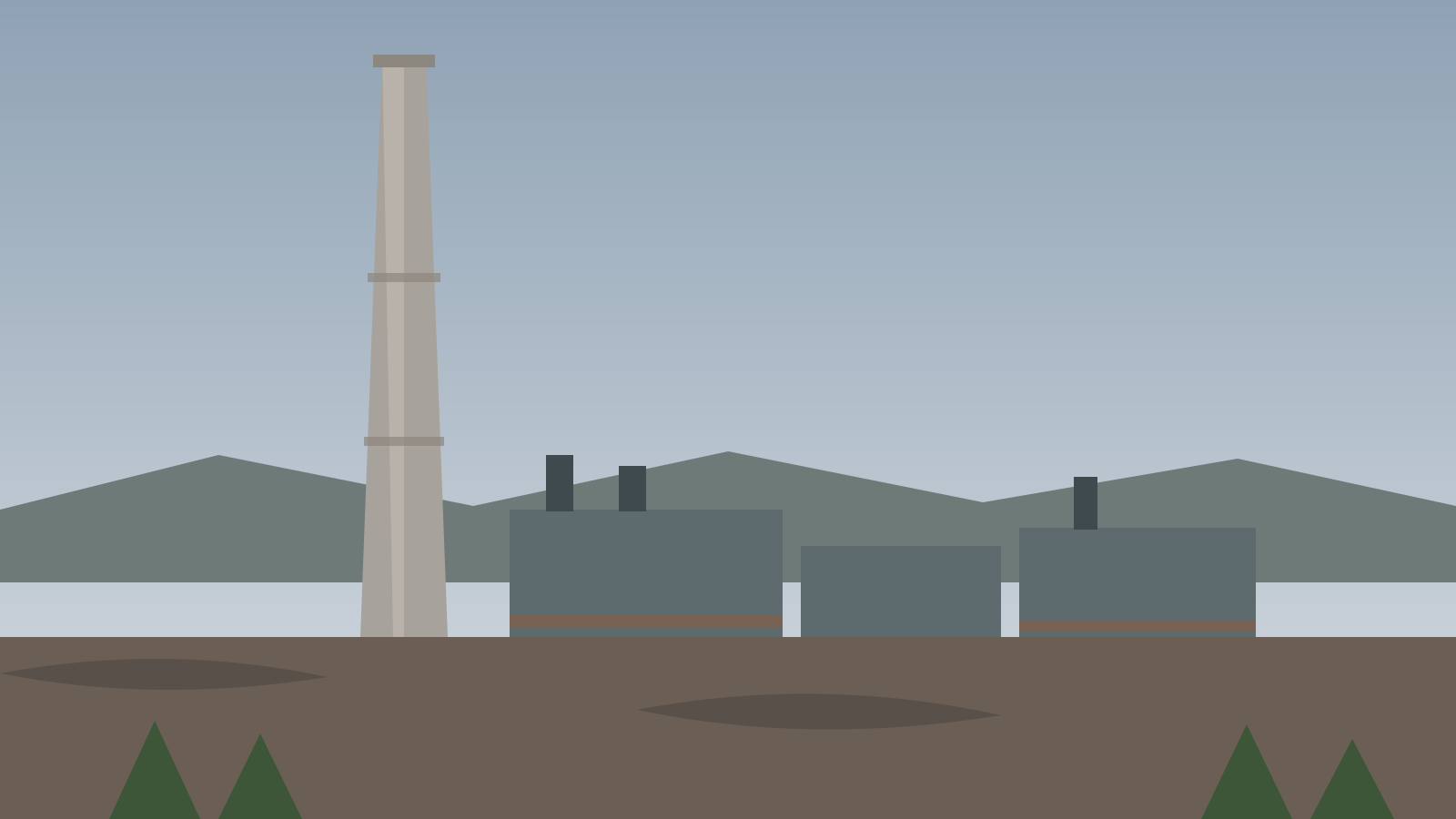
The stack is coming down in stages, and the company has been clear about the engineering. Nobody has been clear about the site.
Most of the public conversation has been about what the skyline will look like, which is understandable and beside the point. The stack is a landmark to people who never worked a shift under it and a working structure to people who did, and both groups will be arguing about the view for a decade. Neither argument determines who is responsible for the ground.
The relevant question is not sentimental. It is jurisdictional: after decommissioning, who holds the long-term monitoring obligation for the ground around the base, and for how long? The province points to the closure plan. The closure plan points to the company. The company points to the closure plan.
A structure that shaped a century of this city's air should not leave a hole in the paperwork.
Closure plans are written to be adequate at the moment they are filed. They are financial instruments as much as environmental ones, and their assumptions — about ownership, about corporate continuity, about what a monitoring programme costs in year forty — are assumptions about a future nobody in the room will be present for. That is not an argument against them. It is an argument for reading them out loud while the people who filed them are still available to answer questions.
Sudbury has been here before. The regreening programme exists because the public eventually paid for damage that was privately caused and publicly ignored. That was a fifty-year bill, and the city is still paying instalments on it in the form of soil work that never appears in anyone's cost of production.
The lesson from that period is not that the companies were uniquely bad actors. It is that when the obligation is vague, the obligation lands on whoever is still standing there in thirty years, and in this basin that has always been the municipality.
The city cannot rewrite a provincial closure plan. It can demand, in writing and at an open meeting, that the province state the monitoring obligation and its duration before the last stage of demolition. Council should pass that resolution this fall, while the question is still theoretical and therefore still cheap to answer.
The Standard is funded by readers. No advertising from anyone the paper covers. Corrections policy.